
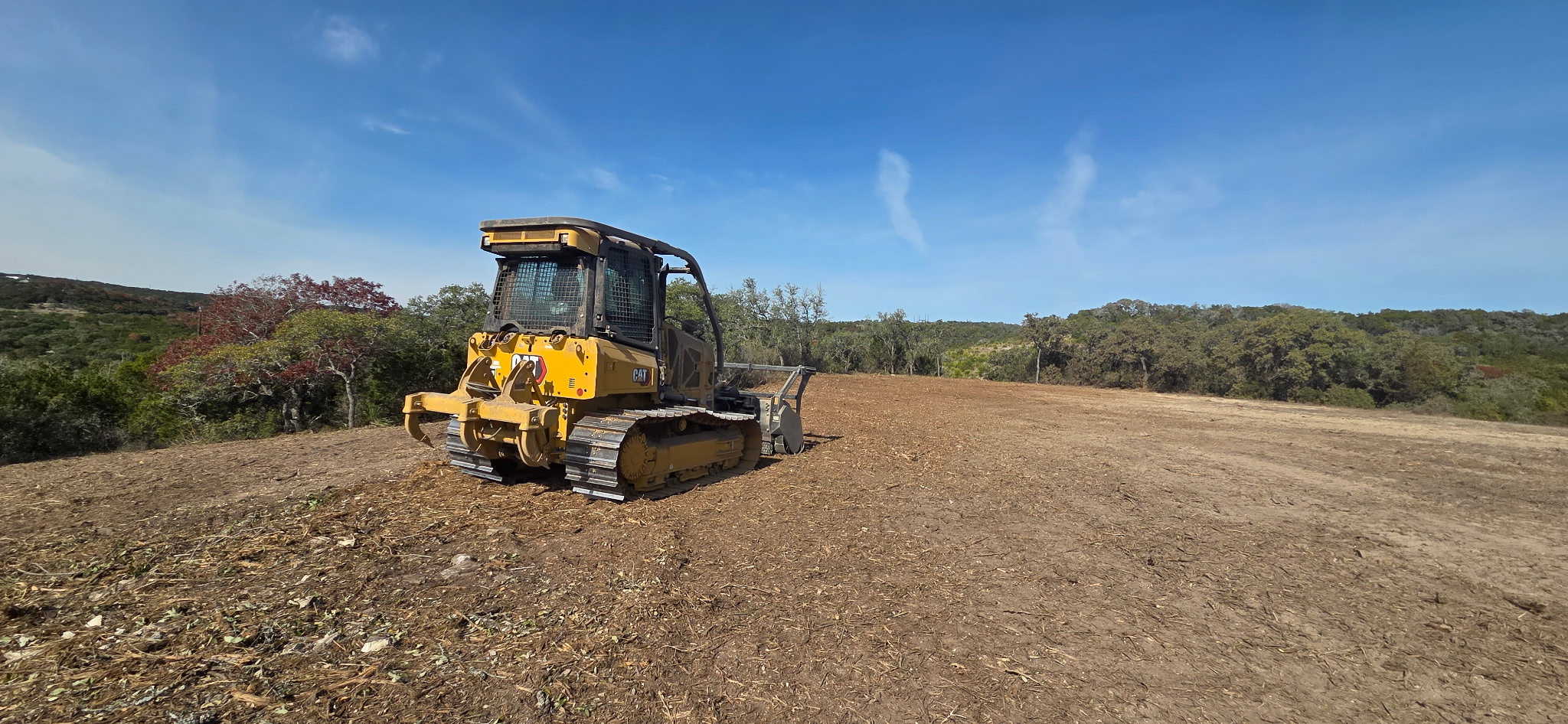
Winter land clearing in Central Texas usually finishes faster than the same job in spring. A 1 to 5 acre lot takes one to three days. Ten to twenty acres runs three days to two weeks. Above twenty acres, plan on two weeks or more. Dry winter ground is the reason.
That last sentence is the part most articles skip. The machine doesn’t change between January and May. The dirt does.
Winter Land Clearing Timelines by Property Size
Below is what our crews book from December through February across Burnet, Williamson, Travis, and Llano counties. These are working days on site, not calendar days from signature to finish.
| Property Size | Light Brush & Cedar | Heavy Timber or Mixed Growth |
| Under 1 acre | 1 day | 1–2 days |
| 1–5 acres | 1–2 days | 2–4 days |
| 5–10 acres | 2–3 days | 4–7 days |
| 10–20 acres | 3–5 days | 1–2 weeks |
| 20+ acres | 1–2 weeks | 2–4 weeks |
One forestry mulcher covers 3 to 5 acres a day in light cedar. That drops to 1 or 2 acres a day in mature hardwoods or anywhere stumps have to come out. If you want the full picture of how different methods change the pace, our complete guide to land clearing methods and costs breaks each one down.
How long does land clearing take in winter versus summer? The same acreage typically runs 20% to 30% faster in winter across Central Texas. Dry ground carries heavy equipment without rutting, and leafless brush is quicker to read and cut.
Why Winter Clearing Moves Faster in Central Texas
The ground actually holds the machine
February is Austin’s driest month, averaging just 1.89 inches of rain. May is the wettest, averaging just over 5 inches, as the KXAN Austin weather blog breaks down in its look at local rainfall extremes. Three extra inches of rain doesn’t sound like much until a 30,000-pound mulcher sinks past the tracks and the day turns into a recovery job instead of a clearing job.
Dry caliche and limestone soil also means less repair work behind us. Spring clearing on soft ground leaves ruts that you end up smoothing out later.
Bare brush shows the real job
Cedar stays green year-round, but hardwoods, mesquite, and understory growth drop their leaves. A crew walking a winter property can see fence lines, rock ledges, old stumps, and drainage cuts that summer growth hides completely.
That matters for your timeline more than people expect. Surprises found on day one are what turn a three-day quote into a six-day job.
Did You Know? Cedar removal is one of the few clearing tasks that runs at nearly the same speed year-round, since cedar never goes dormant. That’s part of why cedar takes such a toll on Texas pastures — it keeps drinking water through the months when everything else has stopped.
Fewer lost days on the calendar
Weather delays are timeline killers. A spring job that gets rained out Tuesday and Wednesday doesn’t just lose two days. The ground stays too soft to work Thursday, and sometimes Friday. Winter rain events in the Hill Country are usually smaller and dry out faster.
The Oak Wilt Deadline That Sets Your Real Timeline
Here’s the scheduling rule that decides more winter projects than weather does, and almost nobody mentions it in a clearing quote.
Texas A&M Forest Service advises that pruning or wounding oaks should be avoided from February through June, because the sap beetles that carry oak wilt fungus are most active then. Live oaks across Burnet and Travis counties are already under pressure from this disease.
So when a property has oaks in the clearing plan, our crews treat February 1 as a hard line. We’ve told landowners in January that we could start their job the following week or wait until July, and there was no middle option. One ranch owner near Bertram pushed his start date up eleven days after we explained it. His neighbor waited and lost the window for six months.
That’s the piece that changes your true timeline. Your clearing work might only take four days, but if oaks are involved and you call us in March, your project doesn’t finish in four days. It finishes in July.
Pro Tip: If your property has any live oak or red oak in the clearing zone, get your site visit scheduled before the holidays. Any oak cut we do gets painted immediately regardless of the month, but the calendar still rules the schedule.
What Can Still Slow a Winter Job Down
Ice days, not cold days
Cold doesn’t stop a mulcher. Ice does. Central Texas gets a handful of days each winter where rural roads make equipment transport unsafe, and those days come out of your schedule. Build one or two buffer days into a week-long job.
Burn bans and what happens to the debris
If your plan involves burning slash piles, county burn bans can pause that part of the job. Check the Texas A&M Forest Service burn ban map for your county before you count on it.
This is where mulching wins on timeline. Forestry mulching turns the material into ground cover on the spot, so there’s no burn day, no haul-off, and no waiting on a county decision.
The December booking wall
Every landowner in the Hill Country figures out that winter is the good window, which means December through February is our tightest stretch of the year. The job itself takes four days. Getting on the calendar can take three weeks.
Did You Know? Winter clearing quotes tend to be steadier than spring quotes, since crews aren’t pricing in weather risk and equipment recovery. Our breakdown of land clearing costs per acre in Texas walks through what actually drives the number.
How to Lock In Your Winter Timeline
- Book the site walk in October or November. This is the single biggest lever on your finish date. Quotes made from a walked property are far more accurate than quotes made from a map.
- Flag every oak before February. Mark them, photograph them, and tell your contractor. It changes the sequence of the whole job.
- Decide on debris up front. Mulch on site, haul off, or burn. Each choice adds or removes days.
- Confirm access for heavy equipment. A low-water crossing or a soft entry road can delay a start by itself.
- Add two buffer days. Ice, holidays, and a surprise rock shelf all come out of the same pot.
Pro Tip: Ask your contractor what their machine clears per day on ground like yours, then do the math against your acreage. If the numbers don’t line up with the quoted timeline, ask why before you sign.
Ready to Get on the Winter Schedule?
Winter is the fastest, driest, and most predictable stretch of the year to clear land in Central Texas — as long as you get your start date ahead of the February oak wilt window and ahead of the December rush. Most properties finish in days, not weeks. The part that stretches is the wait to begin.
Crosscut Land Clearing runs forestry mulching, selective clearing, and full site prep across Bertram, Austin, San Antonio, and the surrounding Hill Country. Request a free site visit and we’ll walk your property, give you a real day count, and tell you exactly which week we can start.
Frequently Asked Questions
Is winter a good time to clear land in Texas?
Yes. Winter is generally the best clearing window in Central Texas because the ground is drier, brush is dormant and easier to cut, and fewer days are lost to rain. Jobs commonly run 20% to 30% faster than the same work in spring.
How many acres can be cleared in one day in winter?
A forestry mulcher clears roughly 3 to 5 acres per day in light cedar and brush during winter conditions. Dense hardwoods, large stumps, or rocky ground drop that to 1 to 2 acres per day.
Can land clearing be done when the ground is frozen?
Yes, and frozen ground is often ideal because it supports heavy equipment with almost no rutting. Central Texas rarely freezes deep enough to stop work, though icy roads can delay equipment transport by a day.
Should I clear land before or after February in Texas?
Clear before February if oaks are involved. Texas A&M Forest Service advises against wounding oaks from February through June due to oak wilt risk, which can push an oak-heavy project all the way to summer.
How far in advance should I book winter land clearing?
Book four to six weeks ahead for December through February work. Winter is the busiest season for Hill Country clearing contractors, so the wait for a start date is often longer than the job itself.