
The Complete Guide to Land Clearing: Methods, Costs & What to Expect
Land clearing methods fall into five main types: forestry mulching, dozer or excavator clearing, hand clearing, herbicide treatment, and controlled burns. Most Central Texas properties use forestry mulching because it works fast, skips the burn pile, and leaves a layer of mulch behind to protect the soil. Costs typically run $500 to $8,000+ per acre, depending on how thick the brush is and which method you choose.
That’s the short answer. Below, we’ll walk through each method, real cost ranges, how long the work takes, what happens to the debris, and the permits you might need before a machine ever touches your property.
What Is Land Clearing?
Land clearing is the process of removing trees, brush, stumps, and other vegetation from a piece of property. Landowners clear land to prepare for construction, open up pasture for cattle, improve wildlife habitat, reduce wildfire risk, or simply make an overgrown property usable again.
Reasons for clearing usually fall into a few buckets. Some landowners are prepping a home site or a barn pad and need bare, buildable ground. Others are running cattle or horses and need thick cedar and brush cleared out so grass has room to grow back. Hunters and recreational landowners often clear for line of sight and better wildlife habitat, while some folks just bought a wooded lot and want it to feel like usable land instead of an overgrown thicket.
The right approach depends on your goals. A landowner prepping a home site needs a different plan than a rancher trying to bring back native grass. Want the short, direct version of this definition? Check out our post on what land clearing actually involves for a quick breakdown.
Did You Know? Researchers still debate exactly how much water mature cedar (Ashe juniper) pulls from the soil, but foresters agree it competes hard with grass and hardwoods for the same shallow, rocky ground water in the Hill Country. That competition is one reason so many ranchers clear cedar first when they’re trying to bring back pasture. The Texas A&M Forest Service has good background reading on cedar and brush management if you want to explore further.
The Main Land Clearing Methods
There’s no single “best” way to clear land. Every method trades speed, cost, and ground impact differently. Here’s how the main options stack up.
Forestry Mulching
Forestry mulching uses a machine with a rotating cutting head to grind trees and brush into mulch right where they stand. There’s no burn pile and no hauling. The mulch stays on the ground, where it blocks weeds and holds moisture in the soil.
This method shines on properties with heavy cedar, thick underbrush, or mixed timber. It’s also the most selective option on this list. A skilled operator can clear out choking brush while leaving your best oaks and other hardwoods standing.
Pro Tip: If you have trees you want to keep, always ask your contractor how they handle selective clearing before the machines show up. Not every operator works the same way, and it makes a real difference in what your land looks like when the job’s done.
Dozer & Excavator Clearing
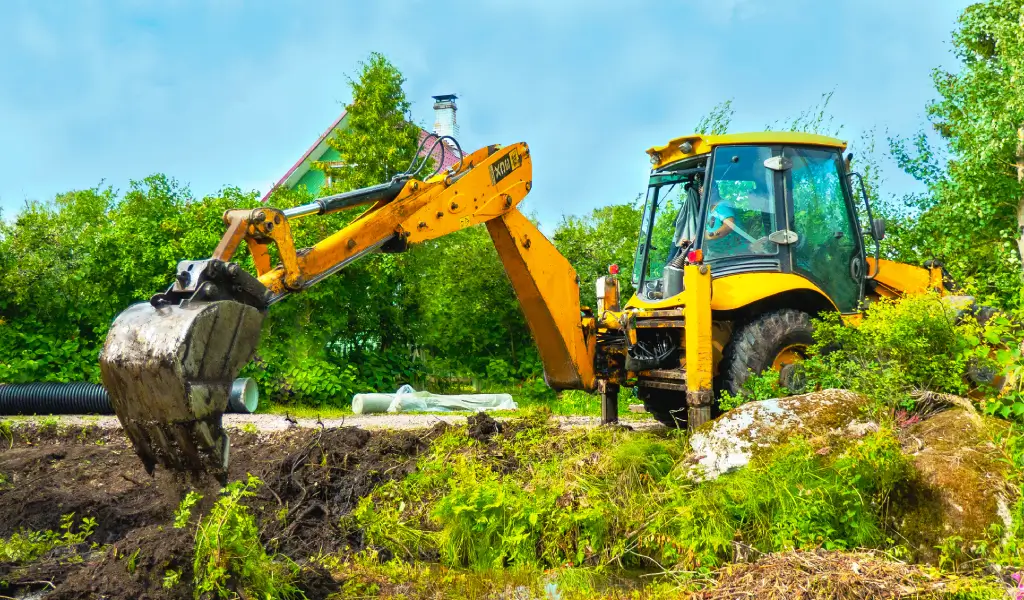
Dozer clearing uses a bulldozer blade to push over trees and brush, often paired with a root rake attachment to pull stumps and roots out of the ground. Excavators do similar work with a digging arm instead of a blade, which gives more control on uneven or rocky ground.
This method clears a property down to bare dirt fast, which makes it a common choice ahead of construction or a full building pad. The tradeoff is that it’s the most disruptive option on this list. Topsoil gets pushed around, root systems get torn up, and there’s usually a large pile of trees, brush, and stumps left to burn or haul away. On properties with erosion-prone slopes or shallow topsoil, that disruption can cause problems that take years to fix.
Hand Clearing
Hand clearing relies on chainsaws, brush cutters, and manual labor instead of heavy machinery. It’s slower and usually costs less per acre on small jobs, but it doesn’t scale well past a few acres.
This method works best on small residential lots, tight or sloped areas machines can’t reach, or spots where you want to protect specific plants or drainage.
Herbicide Treatment
Herbicide treatment kills brush chemically instead of cutting it. It’s often used on mesquite and other species that resprout aggressively after being cut. The downside is time. You won’t see results for months, and dead standing brush often needs a follow-up clearing pass anyway.
Controlled Burns
A controlled, or prescribed, burn clears large stretches of open land fast and adds nutrients back into the soil as ash. Texas rules require notifying the Texas A&M Forest Service before a prescribed burn for forest management, on top of calm weather, enough manpower to keep the fire from spreading past your property line, and a clear county burn ban status, since a ban shuts burning down no matter what else is in place.
Here’s how the methods compare at a glance:
| Method | Best For | Typical Speed | What’s Left Behind |
|---|---|---|---|
| Forestry Mulching | Cedar, brush, mixed timber | 3–5 acres/day per machine | Protective mulch layer |
| Dozer/Excavator | Building pads, full clears | Fast, but pile-heavy | Bare dirt, debris piles |
| Hand Clearing | Small lots, tight spaces | Slow, labor-based | Piles for hauling or burning |
| Herbicide Treatment | Resprouting brush (mesquite) | Months to see results | Standing dead brush |
| Controlled Burn | Large open pasture | Fast on burn day | Ash, open ground |
Not sure which method fits your property? Our post on manual vs. mechanical vs. controlled burn clearing breaks down how to decide. And if you’re weighing forestry mulching against a full clear, land clearing vs. forestry mulching covers exactly how they differ.
How Much Does Land Clearing Cost?
Land clearing costs typically range from $500 to $8,000 or more per acre in Texas. The biggest factors are brush density, terrain, tree size, and which method you use. A light pass on grassy pasture costs far less than clearing dense cedar on a slope.
Forestry mulching usually runs $1,500 to $5,000 per acre, depending on density. Hand clearing on small lots can run $500 to $1,500 per acre but climbs fast on larger properties. Herbicide treatment is the cheapest option up front, often well under $100 per acre for light spot-spraying and up to a few hundred per acre for broadcast application, though it may need a repeat application.
These numbers are general ranges, not quotes. The only way to get an accurate number for your property is a site visit, since density and access change everything.
A few things that push cost up or down on almost every job:
- Brush density. Light brush clears fast and cheap. Dense cedar thickets or mixed timber take more machine time per acre, which raises the price.
- Terrain and access. Steep slopes, rocky ground, or properties with limited road access slow equipment down and add cost.
- Tree size. Clearing saplings and brush costs far less than removing mature trees with large trunks and root systems.
- Debris handling. Mulching leaves material on-site at no extra charge. Hauling debris away or grinding stumps usually costs more.
- Acreage. Larger jobs often come with a lower per-acre rate, since the contractor spends less time moving equipment between small, scattered areas.
For the full cost breakdown by acre, including what drives prices up or down, read how much land clearing really costs.
Pro Tip: Ask any contractor for a price per acre, not just a flat total. It makes it much easier to compare quotes and understand what you’re actually paying for.
How Long Does Land Clearing Take?
Most residential lots and small acreage jobs wrap up in one to five days. Larger properties, especially those over 20 acres with dense brush, can take one to three weeks. Terrain, brush thickness, weather, and permitting all affect the timeline.
Forestry mulching moves the fastest of the mechanical methods. A single machine like a large mulcher can clear 3 to 5 acres a day, depending on how dense the brush is. Hand clearing and herbicide treatment both take longer, since they either rely on manual labor or require waiting months to see results.
A few things can stretch a timeline past the usual range. Wet weather turns rural ground to mud and can shut down equipment for days at a time. A wetland review or extra permitting can add a week or more of waiting before work even starts. And any job that involves hauling debris off-site instead of mulching it in place takes longer, since trucks have to make repeat trips.
Get a fuller timeline breakdown by property size in our post on how long land clearing takes.
What to Expect During the Land Clearing Process
Every land clearing project follows roughly the same steps, no matter which method you choose:
- Site visit and assessment. A contractor walks the property with you, notes tree density, terrain, and any trees or features you want to protect. This is also when they get a feel for access points and where equipment can and can’t reach.
- Plan and quote. You get a written estimate based on acreage, density, and the method that fits your goals. A good quote spells out price per acre, what’s included, and what counts as an add-on.
- Utility and boundary checks. Underground lines and property boundaries get marked before any equipment moves in, so nothing gets clipped or clearing bleeds onto a neighbor’s land.
- Clearing. Machines, hand crews, or a burn crew do the actual work, following the plan from step one. Selective clearing happens here too, with marked trees left standing as the crew works around them.
- Cleanup and mulch spread. Debris gets mulched, hauled, or piled, and the site gets a final walkthrough with you to confirm everything matches what was agreed on.
Want the full step-by-step version, including what to do to prep your property beforehand? Read what to expect during the land clearing process.
What Happens to the Trees and Debris?
Where your cleared material ends up depends on the method. Forestry mulching grinds everything into wood mulch that stays on-site, breaking down over the following year or two and feeding nutrients back into the soil. Hand clearing usually leaves cut material in piles, which get burned (with a permit) or hauled off. Dozer clearing tends to produce the largest debris piles, since pushed trees, root balls, and stumps all end up in one spot.
Not all cleared material goes to waste. Larger trees with commercial value, like mature oak or pecan, are sometimes sold for lumber or milled into firewood before clearing even begins. Cedar, while less valuable as lumber, is often sold as fence posts, since its natural oils make it resistant to rot in the ground for decades. If keeping some of that value matters to you, it’s worth asking your contractor about it during the site visit, since salvage plans have to be made before the clearing starts, not after.
Did You Know? Mulch left behind after forestry mulching acts like a natural weed barrier. Many landowners see less brush regrowth in mulched areas compared to spots that were clear-cut and left bare.
For the full picture of where debris goes and how long mulch takes to break down, see what happens to trees and debris after land clearing.
Do You Need a Permit to Clear Land in Texas?
Most private landowners clearing brush or trees on their own rural property don’t need a state permit. But that’s not the same as no rules at all. A few situations that commonly need a permit or extra sign-off:
- Clearing near a creek, wetland, or floodplain. Work in or near these areas can fall under Clean Water Act Section 404 review, which is handled through the U.S. Army Corps of Engineers rather than the state.
- Burning brush. State rules generally allow burning debris grown on your own property outside city limits without a state permit, but local requirements vary widely. Some counties want a phone call to register the burn, some require an actual permit from the fire marshal, and a few require nothing at all. Whatever your county requires, a county burn ban overrides it completely. The Texas A&M Forest Service tracks burn ban status for every county, and prescribed burns for forest management need to be reported to them ahead of time regardless of county rules.
- Clearing inside city limits. Municipalities often have their own tree preservation or land-disturbance ordinances that don’t apply out in the county.
- Properties enrolled in an agricultural or wildlife exemption. Clearing the wrong acreage or the wrong way can affect your property tax valuation, so it’s worth checking with your county appraisal district first.
Rules vary by county, so it always pays to check before work starts. Our full guide on land clearing permits in Texas walks through exactly what to check and who to call.
Does Land Clearing Increase Property Value?
Often, yes, but it depends on how it’s done. Cleared, usable acreage tends to appraise and sell better than an overgrown lot, especially for buyers who want to build, run livestock, or hunt. A property that’s ready to use saves the next owner both time and money, and buyers tend to pay for that.
That said, clearing the wrong way can hurt value instead of helping it. Stripping a property down to bare dirt removes the mature trees and privacy that many buyers actually want, and it can trigger erosion problems on sloped land that cost real money to fix later. Selective clearing tends to be the safer bet for resale, since it opens up usable space while keeping the trees and natural character that make a property stand out.
If part of your goal is preparing land to sell or develop, it’s worth talking through your plans with a contractor who’s cleared land for that purpose before, not just cleared land in general.
Can Land Be Cleared Without Harming the Environment?
Yes, when it’s done with a plan. Selective clearing protects mature trees and wildlife habitat instead of removing everything. Leaving mulch on the ground instead of burning it cuts down on erosion and helps the soil hold water. Ground conditions matter too, since working a property when the soil is dry and stable does far less damage to soil structure than running equipment across saturated ground.
The method you pick has the biggest impact here. A full clear-cut changes a property fast and permanently, stripping topsoil and removing habitat in one pass. Selective mulching works with the land instead of against it, leaving root systems and topsoil largely intact while still opening up the brush that’s crowding out grass and hardwoods. That’s a big part of why it’s become the go-to choice for landowners who want results without stripping their property bare.
If you’re working toward a wildlife or agricultural exemption, how you clear matters just as much as what you clear. The USDA Natural Resources Conservation Service publishes brush management guidance that’s worth a look if you want to understand how clearing practices affect soil, water, and habitat over the long run.
How to Choose a Land Clearing Contractor
Not every land clearing company works the same way, and picking the wrong one can cost you trees, topsoil, and money you didn’t plan on spending. A few things worth checking before you sign anything:
- Ask if they’re licensed and insured. Land clearing involves heavy equipment on your property. Insurance protects you if something goes wrong.
- Ask how they handle selective clearing. If you want to keep specific trees, find out how the crew marks and protects them, not just whether they say yes.
- Get an itemized, written quote. A price per acre with clear line items is much easier to compare than a single lump sum.
- Ask what equipment they run. Larger, more efficient machines often mean a faster job and a lower price per acre, especially on bigger properties.
- Check real reviews, not just star ratings. Look for landowners describing communication, timeline, and whether the finished work matched what was promised.
- Ask who shows up to the site visit. Contractors who send an owner or an experienced operator to walk the land tend to write more accurate quotes than ones who estimate from a satellite photo.
Pro Tip: A contractor who asks a lot of questions about your goals, not just your acreage, is usually a good sign. Land clearing done right starts with understanding what you want the property to look like when the work is finished.
Choosing the Right Method for Your Land
Did You Know? A large forestry mulcher like a Tigercat M726G puts around 400 horsepower into a 9-foot cutting head. On a typical Central Texas property, that’s enough to clear 3 to 5 acres a day, roughly 20% more efficient than most comparable large machines.
The right method comes down to three questions: what’s on your land now, what you want it to look like after, and how fast you need it done. Dense cedar and mixed brush usually point toward forestry mulching. Small, tight, or sensitive areas often call for hand clearing. Large open pasture with a burn-friendly climate might be a good fit for a controlled burn.
If you’re building close to your property line or a wooded area, distance matters too. Our post on how far trees should be cleared from your house before building covers the setback distances worth knowing before you break ground.
Thinking about doing it yourself? Rented equipment and a weekend of hard labor might handle a small lot, but larger or denser properties usually cost more in time, fuel, and mistakes than hiring it out. See DIY vs. professional land clearing for an honest breakdown of when each option makes sense.
Timing matters, too. Late fall through winter is usually the best window for clearing in Central Texas. The ground is drier, brush has less leaf cover to slow equipment down, and machines cover more acreage per day as a result. Wet stretches are the bigger scheduling risk on any property, since saturated ground can stop equipment entirely until it dries out. If your schedule allows some flexibility, booking a fall or winter slot often means a faster job and a lower risk of weather delays.
Land Clearing Methods: The Bottom Line
Land clearing methods aren’t one-size-fits-all, and neither is your property. Forestry mulching handles most Central Texas jobs efficiently while protecting the trees you want to keep, but dozer clearing, hand clearing, herbicide treatment, and controlled burns each have their place depending on your land and your goals. Cost, timeline, and the right permit questions all come back to that same choice.
The best next step is a site visit. A short walk around your property with an experienced operator will tell you more about cost, timeline, and the right method than any online estimate ever could. Schedule a free site visit with Crosscut and get a real plan for your land, built around what you actually want your property to look like when the work is done.
Planning land work in Central Texas? See our land clearing in Austin and land clearing in San Antonio pages, or review our land clearing services before you request a free site visit.
Frequently Asked Questions
What is land clearing?
Land clearing is the removal of trees, brush, and other vegetation from a property to prepare it for construction, farming, or better land use. It can be done through mechanical mulching, hand clearing, herbicide, or controlled burns. The right method depends on your land and your goals.
What’s the difference between land clearing and forestry mulching?
Land clearing is the general term for removing vegetation from a property, while forestry mulching is one specific method for doing it. Mulching grinds brush and trees into mulch on-site instead of burning or hauling debris away, making it faster and less disruptive than many other clearing methods.
Do I need a permit to clear land in Texas?
Most private landowners clearing brush on rural property don’t need a state permit. Burning debris is often allowed without one outside city limits, but county rules on registering or permitting a burn vary, and a county burn ban overrides everything. Clearing near wetlands or floodplains can require federal review.
How much does land clearing cost per acre?
Costs typically range from $500 to $8,000 or more per acre, depending on the method and how dense the brush is. Forestry mulching usually falls between $1,500 and $5,000 per acre. A site visit is the only way to get an accurate number for your specific property.
Can I clear land myself, or do I need a professional?
Small, light jobs can sometimes be handled with rented equipment, but larger or denser properties usually need professional equipment and experience to avoid wasted time, damaged trees, or safety risks. Most landowners find that hiring a pro costs less in the long run than a DIY attempt that goes sideways.